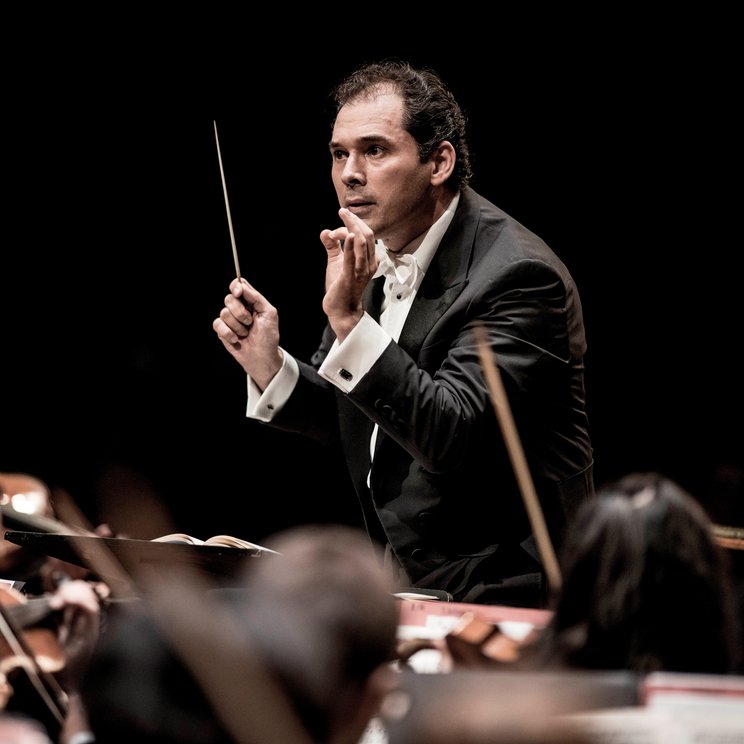
Mention Mozart’s G minor Symphony, and you tend to think of the “Great” one that belongs to the middle of his legendary final symphonic trilogy — the one that opens with a motif that has even had an afterlife as a mobile ringtone. But there is also the “Little” G minor: a youthful, wild work by the 17-year-old Mozart that is driven by an expression of unbridled fury and sharp dynamic contrasts — the very embodiment of Sturm und Drang. With the Ossetian conductor Tugan Sokhiev on the podium, the Vienna Philharmonic will reveal this “other” Mozart, who was anything but delicate rococo. They will then unleash the storms of life and love with Gustav Mahler’s autobiographically inspired First Symphony. Sokhiev holds a special affection for Mahler’s debut symphony and finds it distinctly dramatic: “For me, Mahler is always a man of the theater,” he says. “He had specific images in mind as he composed. Close your eyes in the first movement and you feel as though you’re standing in the middle of nature. The third movement, with its procession of animals that don’t quite know whether they’re celebrating the hunter’s death or mourning it, is full of irony. And in the finale, life triumphs.